
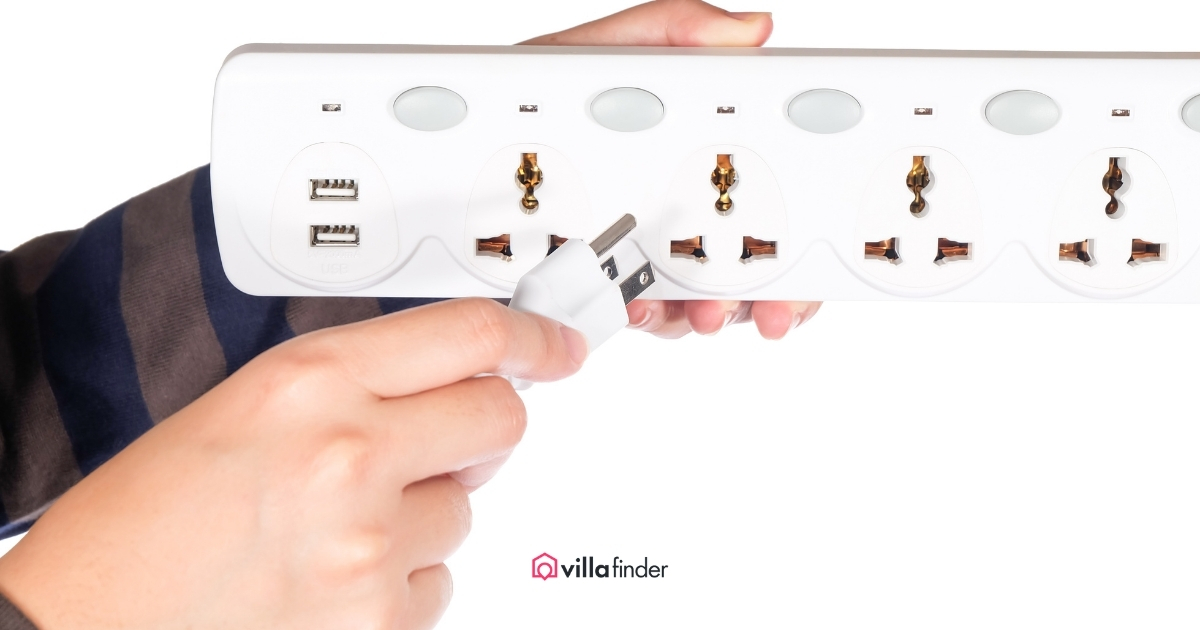
Every trip has that one tiny detail that sneaks up on you. For Bali, it’s the Bali power plug. You land, head to your villa, ready for a poolside photo session… and then realize your charger doesn’t fit the socket.
It’s not just an inconvenience—it can throw your whole rhythm off. Phones stay uncharged, laptops can’t connect, and even hair dryers go silent. Suddenly, that perfectly curated holiday schedule takes a detour to the nearest convenience store.
Here’s where many travellers go wrong: they assume plugs and power are the same everywhere. But the truth is, every country has its quirks—and what works in Bali won’t always work in Japan, Thailand, or Sri Lanka.
The good news? Once you understand the basics, it’s surprisingly easy to outsmart the system. And that’s exactly what smart travellers do.
What’s the single smartest thing you can learn about power abroad?
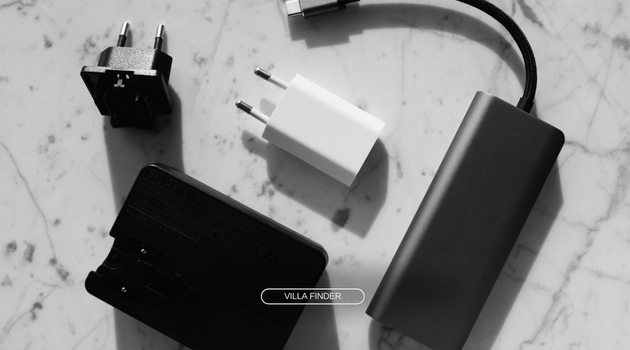
That an adapter and a converter are two very different things. Most people mix them up, and that’s where holiday meltdowns start.
- Adapters change the shape of your plug so it fits the socket.
- Converters (or transformers) actually change the voltage—and they’re only necessary if your device can’t handle local electricity.
- Frequency (50Hz or 60Hz) rarely matters for phones and laptops, but can mess with certain appliances like electric clocks or motors.
Here’s the smart hack: check the label on your charger. If it says “Input: 100–240V, 50/60Hz”, you don’t need a converter. That little line of text is basically your ticket to stress-free travel.
Why this matters? Because carrying the wrong gear adds weight and hassle. Transformers are heavy, expensive, and in most cases, unnecessary. One good adapter is all you really need in 90% of situations.
What are the different power plug types?
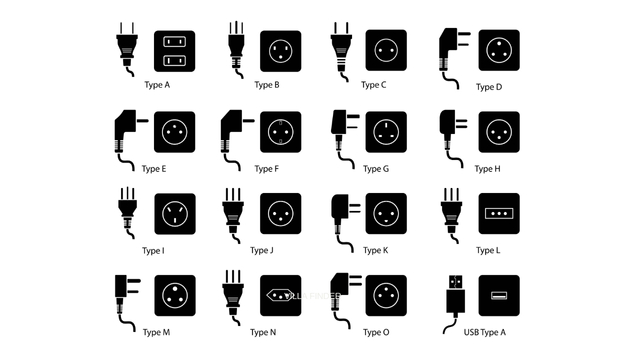
If you’ve ever stared at a socket abroad and thought, “That can’t be real…” — you’re not alone. There are over a dozen plug types worldwide, and knowing them in advance means no guessing games when you’re tired, jet-lagged, and desperate to charge your phone.
The most common plug types you’ll encounter include:
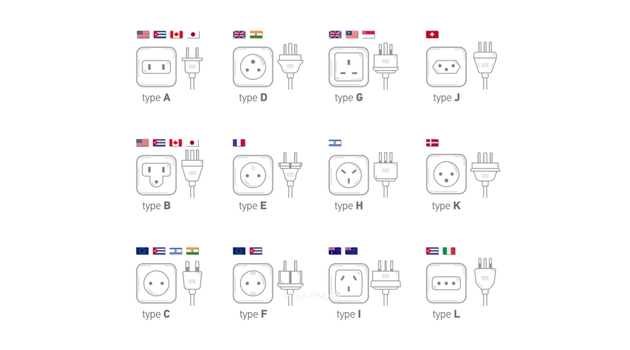
- Type C (Europlug): Two thin round pins, found across Europe and much of Asia, including Indonesia (and Bali).
- Type F (Schuko): Similar to Type C but with grounding clips; used in Indonesia, Germany, and parts of Asia.
- Type A: Two flat pins (no ground), common in Japan and parts of North America.
- Type B: Two flat pins + one round ground pin, found in Japan, USA, and Canada.
- Type O: Thailand’s unique version of the two/three pin socket, designed to fit both flat and round pins.
- Type D: Three chunky round pins in a triangle, widely used in Sri Lanka and India.
- Type G: The famous three-rectangular-pin style, standard in the UK and also in Sri Lanka.
If you invest in a quality universal adapter, these are the types you’ll cover; which means you’ll be ready for Bali, Japan, Thailand, Sri Lanka, and most of your bucket list.
What power plugs to use in Bali and Indonesia?
Let’s start with Bali, since it’s the most popular entry point for Australian travellers. Indonesia (and therefore Bali) uses Type C and Type F plugs, with 230V, 50Hz electricity. That’s perfect for Australians, because the voltage matches what we use at home.
So why the drama? It’s simply about the shape. AU’s Type I plugs won’t fit into Bali’s sockets. That’s it. No converters, no transformers—just an adapter.
But here’s the catch: electricity in Bali can be unpredictable. Voltage spikes happen, especially during storms. This can damage sensitive gear like laptops or cameras. That’s why smart travellers bring:
- A Type I to C/F adapter (or a universal one).
- A surge-protected power strip for multiple devices.
- A USB-C multi-port charger, so one socket charges everything.
So yes, the Bali power plug is an easy fix once you know—but don’t forget to protect your devices from the occasional power hiccup.
How to use the correct power plugs in Japan?
If Bali is simple, Japan is the curveball. The sockets are Type A and Type B (flat prongs), but the real difference is the voltage: 100V. That’s less than half of Australia’s 230V.
For everyday gear like phones, cameras, and laptops, this isn’t a big deal—most chargers are built for global use (100–240V). But where travellers run into trouble is with high-wattage appliances:
- Hair dryers and straighteners: they’re usually 230V-only, meaning they’ll underperform or stop working entirely in Japan.
- Kettles, irons, and other heat-based appliances: also not worth packing.
So what’s the smart move?
- Leave single-voltage appliances at home. Hotels and Airbnbs in Japan almost always provide hair dryers.
- Pack one good adapter and a GaN charger. GaN chargers are compact, powerful, and handle laptops and phones together.
- Bring a short travel power strip. Hotel rooms in Japan often have just one or two sockets, and you’ll want to charge everything overnight.
Smart travellers don’t lug heavy transformers—they plan for Japan’s quirks and pack accordingly.
Why does Thailand feel like a power plug jungle?
Thailand is where things get… creative. The country uses a mix of Type A, B, C, F, and even their own Type O. The voltage is 220–230V, which is great for Australians, but the problem is the inconsistency.
Walk into one café and you’ll find a socket that takes your adapter perfectly. In the next, your plug dangles halfway out of the wall. It’s not unsafe, but it’s unreliable.
What’s the AU traveller’s solution?
- Use a sturdy universal adapter. Avoid flimsy versions—they tend to wobble in Thai sockets.
- Carry a short extension strip. Plug the strip into the wall once, then connect your chargers securely to the strip.
- Don’t rely on just one socket. If you’re travelling with a group, expect a bit of adapter-sharing drama unless you bring extras.
Thailand isn’t hard—it’s just messy. The trick is to plan for loose fits and have a setup that works in any situation.
What makes Sri Lanka the wildcard in terms of power plug?
Sri Lanka doesn’t just pick one style—it mixes them. You’ll see Type D, Type G, and sometimes Type M plugs. The good news? Like Australia, it runs on 230V, 50Hz. The challenge is the sheer variety.
Here’s the problem: many universal adapters don’t actually support Type D or M. And when that’s the only socket in your hotel room, you’re stuck.
That’s why the smart hack for Sri Lanka is to:
- Buy a reliable universal adapter (check the fine print for D, G, and M compatibility).
- Carry a power strip if you’re travelling as a family or group—one adapter + one strip = everyone happy.
- Pack early, because you won’t always find the right adapters easily once you’re in Sri Lanka.
Sri Lanka is the kind of place where the wrong adapter can cost you valuable time. Better to sort it before you fly.
What’s the ultimate “always-charged” kit for smart travellers?
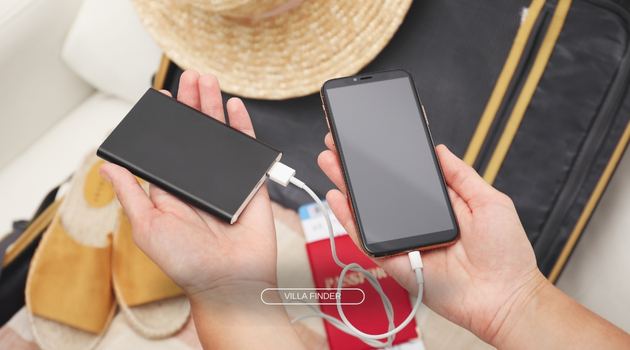
By now, you’ve probably noticed a theme: the real win is packing light, versatile, and universal. Smart travellers build a charging kit that works everywhere, so they never have to think twice.
Here’s the foolproof combo:
For the solo traveller
- One compact universal adapter (with USB-C PD).
- A small power bank for flights and day tours.
Couples or digital nomads
- A GaN multi-port charger (65–100W).
- A short power strip with multiple outlets.
- One universal adapter (to plug the strip in).
Families or villa groups
- A larger travel strip (with both USB-A and USB-C).
- Two or three universal adapters, so you can split charging across rooms.
- Surge protection—especially important in Bali and Thailand.
With this setup, you’ll glide through Bali, Japan, Thailand, and Sri Lanka without once having to panic about battery life.
Also, here’s your quick-look cheat sheet for AU travellers hopping between Bali, Japan, Thailand, and Sri Lanka:
| Destination | Plug Types | Voltage / Frequency | Adapter Needed? | Converter Needed? |
| Indonesia (Bali) | C, F | 230V / 50Hz | Yes | No |
| Japan | A, B | 100V / 50–60Hz | Yes | Only for 230V-only appliances |
| Thailand | A, B, C, F, O | 220–230V / 50Hz | Yes | No |
| Sri Lanka | D, G, (M in some spots) | 230V / 50Hz | Yes | No |
How does all this actually make your holiday smoother?
Here’s the thing: power plugs aren’t glamorous. They’re not what you daydream about when booking a villa in Seminyak or a beachfront stay in Phuket. But they matter—because every memory you’re trying to capture, every map you’re pulling up, every late-night playlist by the pool depends on one thing: a charged device.
And when you think about it that way, preparing for plugs is just another way of preparing for peace of mind. No frantic adapter hunts, no silent gadgets, no stress. Just seamless travel.
Knowing the quirks of the Bali power plug, Japan’s low voltage, Thailand’s socket jungle, and Sri Lanka’s unique mix means you’ll always be a step ahead.
Because let’s be honest: travel is about memories, not meltdowns. And with the right kit, you can move from villa to villa, country to country, without ever missing a beat.
At Villa Finder, we help you plan the big things (like choosing the perfect villa) and the small details (like making sure your room has enough sockets for the whole family). So the only thing you need to worry about is whether you’ll watch the sunset from your pool or the beach.
FAQs (Quick Fixes for Power Plug Panic)
Is the Bali power plug the same as Indonesia’s?
Yes, Bali follows Indonesia’s standard: Type C and F plugs, 230V, 50Hz.
Do I need a converter in Bali?
Not if your device says 100–240V. An adapter is enough.
Can I use my AU hair dryer in Japan?
Not unless it’s dual voltage. Better to use the hotel’s.
Why do my chargers keep slipping out in Thailand?
Sockets are often loose. A short power strip fixes it.
Which adapter is best for Sri Lanka?
Choose one that lists Type D and G specifically. Many cheap ones skip these.
If you like what you read, subscribe to our Newsletter:
Related Articles:
Layover vs Stopover Flights: Which One Should You Choose for Your Next Trip?
The Best Time to Book a Villa (It’s Not When You Think)
How Long Will Your Jet Lag Last? Use This Calculator to Find Out!




Comments are closed.